Forex Brokerage Launch Framework 2026: Your Definitive Guide
Executive Overview
This comprehensive guide outlines a strategic framework for launching a successful forex and crypto brokerage in 2026, covering regulatory compliance, advanced technology, liquidity solutions, and market differentiation.
This guide is written with an operational perspective for brokerage executives, technical teams, and investors who need an executable output.
Table of Contents
The financial landscape of 2026 presents both formidable challenges and unparalleled opportunities for aspiring brokerage founders and established institutions looking to expand. A robust Forex Brokerage Launch Framework 2026 is not merely an advantage; it's a strategic imperative for navigating the intricate currents of volatility, technological innovation, and evolving regulatory demands. This guide provides a definitive, expert-level roadmap to strategically plan and execute a successful forex and/or crypto brokerage launch.
Key Takeaways
- A structured launch framework is crucial for navigating 2026's volatile, tech-driven, and complex regulatory environment.
- Strategic niche definition, robust business planning, and competitive differentiation are foundational to long-term success.
- Careful selection of regulatory jurisdiction and meticulous compliance with AML/KYC and data privacy standards are non-negotiable.
- Advanced technology, including multi-platform support, integrated CRMs, and resilient infrastructure, forms the operational backbone.
- Optimized liquidity aggregation, sophisticated risk management, and diverse payment solutions are critical for operational stability.
- Effective marketing, continuous innovation, and a focus on scalability are essential for attracting clients and ensuring future-proofing.
Executive Summary: The 2026 Landscape for New Brokerages
The year 2026 ushers in a dynamic era for financial services, characterized by heightened market volatility, the deepening integration of cryptocurrencies, the transformative influence of AI and Machine Learning, and an ever-evolving regulatory tapestry. For new brokerage entrants and incumbents expanding their service portfolios, this environment demands more than just a basic setup; it requires a structured, forward-looking launch framework that anticipates future trends and mitigates inherent risks.
Key challenges include navigating fragmented global regulations, managing sophisticated cyber threats, and competing in a crowded market dominated by established players. However, unprecedented opportunities also abound: the burgeoning demand for digital assets, the potential for hyper-personalized client experiences through AI, and the ability to leverage cloud-native infrastructure for unparalleled scalability and efficiency. Success hinges on a strategic imperative: comprehensive planning that extends beyond mere operational readiness to encompass a sustainable, client-centric, and technologically advanced ecosystem.
Strategic Foundations: Market Niche & Business Model Definition
Establishing a solid foundation begins with meticulous strategic planning. This involves clearly defining your market niche and crafting a robust business model that can withstand market fluctuations and regulatory changes.
Identifying Your Target Audience & Niche
The first step in how to start a forex broker business is to precisely define your target audience. Will you cater to retail traders seeking accessible platforms, or institutional clients demanding deep liquidity and advanced tools? Consider your geographic focus, as this heavily influences regulatory requirements and marketing strategies. Product specialization is also key: focusing solely on Forex, or integrating Crypto, Indices, Commodities, or Stocks? For those eyeing the rapidly growing proprietary trading sector, offering prop trading firm launch checklist infrastructure can be a lucrative niche.
Developing a Robust Business Plan
A comprehensive business plan is your blueprint for success. It must include detailed financial projections, encompassing startup costs (licensing, technology, initial staffing), ongoing operational expenses (liquidity, marketing, compliance), and realistic revenue models (spreads, commissions, swap fees). Crucially, articulate a clear scalability strategy to accommodate growth without compromising service quality. Your unique value proposition—what makes your brokerage stand out—must be clearly articulated, whether it's superior technology, exceptional client support, or specialized market access.
Competitive Analysis & Differentiation
Conduct a thorough SWOT analysis (Strengths, Weaknesses, Opportunities, Threats) of your potential competitors. Identify existing market gaps that your brokerage can fill. Perhaps there's an underserved geographic region, a demand for a specific asset class, or a need for a more intuitive trading experience. Crafting a compelling brand identity that resonates with your target audience and communicates your unique differentiators is paramount for attracting initial clients.
Legal Entity Formation
Choosing the optimal corporate structure is a critical early decision. This involves understanding the jurisdictional implications for taxation, banking relationships, and operational ease. For instance, some jurisdictions offer more favorable tax regimes, while others provide easier access to banking services crucial for a brokerage. This foundational legal structure will underpin all subsequent regulatory and operational decisions.
Navigating the Regulatory Maze: Licensing & Compliance for 2026
Regulatory compliance is the cornerstone of a credible and sustainable brokerage. The landscape for 2026 is increasingly stringent, especially concerning crypto brokerage setup requirements.
Selecting the Optimal Regulatory Jurisdiction
Choosing where to license your brokerage is one of the most impactful decisions. In-depth comparison of regulatory bodies is essential:
- Tier-1 Jurisdictions: Regulators like the UK's FCA, Australia's ASIC, or Cyprus' CySEC offer high credibility and broad market access, but come with substantial capital requirements and rigorous compliance obligations.
- Tier-2 Jurisdictions: Options like the FSC Mauritius or LFSA Labuan (Malaysia) offer a balance of credibility and more manageable capital thresholds, often suitable for startups seeking a reputable yet accessible license.
- Offshore Jurisdictions: Regulators such as the VFSC (Vanuatu) or Mwali (Comoros) are typically faster and less expensive, but may carry lower global reputation and restricted market access.
Factors for Jurisdiction Choice
Several factors should guide your choice: capital requirements, the estimated time-to-license, the market reputation associated with the regulator, operational flexibility, and crucially, your target market access. For crypto brokerages, specific considerations for DLT (Distributed Ledger Technology) or VASP (Virtual Asset Service Provider) licenses are vital, as these are increasingly mandated by global standards like FATF.
The Licensing Application Process
The application process demands meticulous preparation. Required documentation typically includes a detailed business plan, proof of capital, fit-and-proper assessments for directors, and comprehensive operational manuals. Timelines can vary significantly, from a few months for offshore licenses to over a year for Tier-1 approvals. Costs are substantial, encompassing application fees, legal counsel, and initial capital deposits.
Ongoing Compliance & Risk Mitigation
Post-licensing, continuous compliance is paramount. Implementing robust AML (Anti-Money Laundering) and KYC (Know Your Customer) policies is non-negotiable, requiring sophisticated screening tools. Adherence to data privacy regulations (e.g., GDPR in Europe, CCPA in California) is critical. Leveraging RegTech solutions can automate many compliance tasks, while continuous reporting obligations to regulators demand dedicated resources and expertise.
| Jurisdiction | Capital Requirements (USD Est.) | Time to License (Est.) | Reputation & Credibility | Operational Flexibility | Target Market Access |
|---|---|---|---|---|---|
| FCA (UK) | $150,000 - $1,000,000+ | 12-18 months | Very High | Moderate (Strict Rules) | Global (High Trust) |
| ASIC (Australia) | $100,000 - $500,000+ | 9-15 months | High | Moderate (Strict Rules) | Global (High Trust) |
| CySEC (Cyprus) | €125,000 - €730,000+ | 8-12 months | High | Moderate | EU (MiFID II Passporting) |
| FSC Mauritius | $25,000 - $50,000+ | 4-8 months | Medium-High | High | Africa, Asia, Emerging Markets |
| VFSC (Vanuatu) | $2,500 - $50,000+ | 2-4 months | Medium | Very High | Global (Less Strict) |
Building the Tech Backbone: Platform, CRM & Connectivity
The technological infrastructure is the operational heart of any modern brokerage. A robust fintech brokerage technology stack is essential for efficiency, security, and client satisfaction.
Choosing Your Trading Platform
The trading platform is the primary interface for your clients. Options include:
- MT4/MT5: Widely recognized, offering extensive charting and expert advisor capabilities. You can opt for a white-label solution for faster deployment or a custom bridge integration for greater control.
- cTrader: Known for its advanced features, superior execution, and clean UI/UX, appealing to more sophisticated traders.
- TradeLocker: An emerging platform focusing on social trading and simplified user experience.
- Proprietary Solutions: Offers complete customization and differentiation but requires significant development investment.
Evaluation should consider features, user interface, execution speeds, mobile compatibility, and API integrations.
CRM & Back-Office Systems
An integrated CRM (Customer Relationship Management) and back-office system are vital for managing client lifecycles. Selection criteria should include robust client management capabilities, efficient support ticket systems, comprehensive sales funnel tracking, automated reporting for compliance and business intelligence, and affiliate management functionalities. Seamless integration with your trading platform and other third-party services is crucial for operational fluidity.
Connectivity & Infrastructure
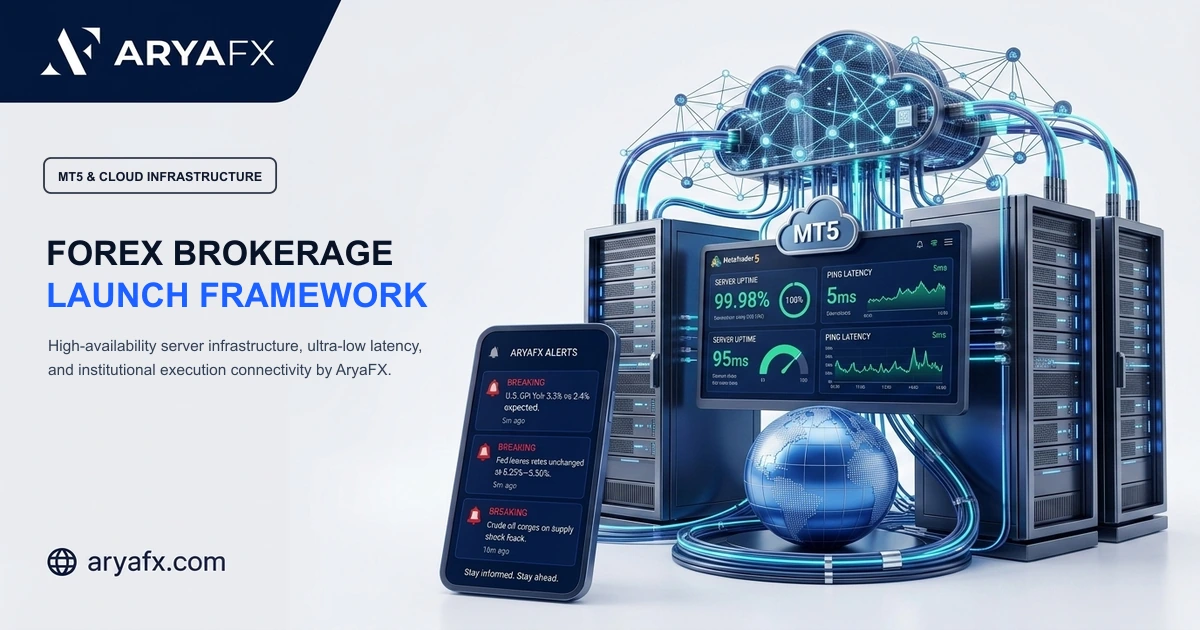
Reliable and low-latency connectivity is non-negotiable. Strategies include dedicated servers, co-location services in major financial hubs (e.g., London, New York, Tokyo) for optimal proximity to liquidity providers, or scalable cloud solutions (AWS, Azure, Google Cloud). Ensuring high availability through redundant systems and implementing robust cybersecurity protocols—including DDoS protection, end-to-end encryption, and regular penetration testing—is paramount to protect client data and maintain operational integrity.
Liquidity Aggregation & Robust Risk Management
Securing deep and reliable liquidity, coupled with sophisticated risk management, are critical pillars for a new brokerage's stability and profitability.
Selecting Optimal Liquidity Providers (LPs)
For forex liquidity solutions for startups, identifying optimal LPs is crucial. Criteria for evaluating Tier-1 banks, non-bank LPs, and prime brokers should include competitive spreads, consistent execution quality, depth of market across various asset classes, instrument availability, and their overall reliability and financial stability. A diversified approach to LPs can mitigate concentration risk.
Multi-LP Aggregation Strategies
Employing a multi-LP aggregation strategy allows your brokerage to achieve the best possible pricing by routing orders to the LP offering the tightest spread and deepest liquidity for a given instrument. This also provides redundancy, ensuring continuous service even if one LP experiences issues. Advanced aggregation technology can intelligently manage order flow, minimizing slippage and optimizing execution.
Implementing Effective Risk Management Systems
Robust risk management for new brokers is paramount. Understanding A-Book (straight-through processing to LPs), B-Book (internalizing client trades), and Hybrid models is essential. Strategies should include real-time position monitoring, setting exposure limits per instrument and client, automated hedging mechanisms to offset B-Book exposure, and sophisticated fraud detection systems to protect both the brokerage and its clients. For prop trading firms, this extends to managing trader capital and strategy risk.
Payment Gateway Integration
Diversified payment gateway integration is vital for client onboarding and retention. Offer a range of options for both fiat and crypto deposits/withdrawals, focusing on security, transaction speed, competitive fees, geographical reach, and efficient chargeback management. Partnering with reputable payment service providers that understand the brokerage industry's unique demands is key.
Operational Excellence: Staffing, Support & Performance Monitoring
Beyond technology and regulation, the human element and operational efficiency drive long-term success for any brokerage.
Team Building & Organizational Structure
Identifying key roles is fundamental: CEO, COO, Compliance Officer, Head of Trading, CTO, and Marketing Manager. Hiring strategies can involve a mix of in-house expertise for core functions and outsourcing for specialized tasks (e.g., IT support, certain compliance aspects). Continuous professional development for your team ensures they remain abreast of market trends and regulatory changes.
Client Support & Onboarding
Exceptional client support fosters loyalty. Establish multi-channel support (live chat, email, phone) with rapid response times. Implement automated onboarding workflows that are intuitive and compliant, minimizing friction for new clients. Providing comprehensive educational resources—webinars, guides, market analysis—empowers traders and enhances their experience with your platform.
Performance Monitoring & KPIs
Regular performance monitoring using key performance indicators (KPIs) is crucial. Track client acquisition cost (CAC), client lifetime value (LTV), conversion rates at various stages of the sales funnel, operational efficiency metrics (e.g., support ticket resolution time), and overall profitability. These metrics provide actionable insights for continuous improvement and strategic adjustments.
Marketing & Brand Building: Attracting Your First Traders
Even with superior technology and robust compliance, attracting clients requires a strategic and sustained marketing effort.
Developing a Cohesive Brand Identity
Crafting a unique selling proposition (USP) that clearly articulates what makes your brokerage different and better is paramount. Develop consistent brand messaging across all channels, supported by a compelling visual identity (logo, website design, branding guidelines). This ensures recognition and builds trust with potential clients.
Digital Marketing Strategies
Leverage a multi-pronged digital marketing approach. Implement SEO (Search Engine Optimization) and content marketing strategies, publishing expert guides, market analyses, and educational articles to attract organic traffic. Execute targeted PPC (Pay-Per-Click) campaigns on platforms like Google Ads and social media. Develop robust affiliate programs and partnerships with Introducing Brokers (IBs) to expand your reach and reward referrals.
Social Media Engagement & Community Building
Actively engage on relevant social media platforms to foster a loyal community around your brand. Share valuable insights, respond to comments, and run interactive campaigns. Proactive reputation management and a plan for crisis communication are essential to maintain trust and credibility in the fast-paced digital world.
Public Relations & Media Outreach
Strategic public relations and media outreach can significantly enhance your brokerage's credibility and visibility. Secure features in financial publications, participate in industry events, and establish your team as thought leaders. This builds trust and positions your brokerage as an authoritative voice in the market.
Future-Proofing Your Brokerage: Innovation & Scalability for Long-Term Success
The financial services industry is in constant flux. To ensure long-term success, a brokerage must continuously innovate and plan for scalability.
Embracing Emerging Technologies
Integrate AI and Machine Learning for personalized trading experiences, enhanced risk management, and sophisticated fraud detection. Explore blockchain technology for increased transparency, immutable record-keeping, and the potential for tokenized assets. Implementing Event-Driven Architectures can provide real-time performance and responsiveness crucial for modern trading environments.
Scalability Planning
Design your infrastructure for elastic growth from day one. This includes cloud-native architectures, microservices, and auto-scaling capabilities to handle increased trading volumes, a growing client base, and geographic expansion without performance degradation. A scalable architecture is key to sustaining growth.
Diversification of Offerings
Continually assess market demand for new asset classes (e.g., exotic FX pairs, specialized cryptocurrencies), services (e.g., copy trading, managed accounts), and strategic partnerships. Diversification can open new revenue streams and attract a broader client base, reducing reliance on any single market segment.
Continuous Improvement & Adaptation
Establish robust feedback loops for client satisfaction, regularly review your technology stack and operational processes, and proactively adapt to market trends, regulatory shifts, and technological advancements. A culture of continuous improvement is vital for staying competitive and relevant in the dynamic financial industry.
Frequently Asked Questions
What are the essential technology components required to launch a competitive forex brokerage in 2026?
Essential technology components include a robust trading platform (e.g., MT4/MT5, cTrader, or proprietary), an integrated CRM and back-office system for client management, advanced liquidity aggregation software, secure payment gateways, and resilient, low-latency infrastructure (dedicated servers or cloud solutions) with strong cybersecurity protocols. Integration with RegTech solutions for compliance is also increasingly vital.
How much capital is realistically needed to start a regulated forex and crypto brokerage?
The capital required varies significantly based on the chosen regulatory jurisdiction. For Tier-1 licenses (e.g., FCA, ASIC), initial capital requirements can range from $100,000 to over $1,000,000, plus substantial operational costs. Tier-2 licenses (e.g., CySEC, FSC Mauritius) might range from $25,000 to $500,000. Offshore licenses can be lower, starting from a few thousand dollars, but come with trade-offs in reputation and market access. Total startup costs, including technology, legal, and operational expenses, can easily exceed these minimum capital requirements.
What are the primary regulatory challenges and licensing options for a new brokerage targeting global clients?
Primary regulatory challenges include navigating diverse and often conflicting international regulations, particularly for crypto assets (VASP/DLT licenses), adhering to global AML/KYC standards, and managing data privacy laws (GDPR, CCPA). Licensing options typically fall into Tier-1 (FCA, ASIC, CySEC for high credibility), Tier-2 (FSC Mauritius, LFSA Labuan for balanced credibility and cost), and Offshore (VFSC, Mwali for speed and lower cost, but less global recognition). The choice depends on target markets, budget, and desired reputation.
How can a new brokerage effectively acquire liquidity and manage trading risk from day one?
A new brokerage can acquire liquidity by partnering with multiple reputable Tier-1 banks, non-bank LPs, and prime brokers, evaluating them on spreads, execution, and depth. Utilizing a multi-LP aggregation system ensures competitive pricing and redundancy. For risk management, implementing A-Book, B-Book, or hybrid models, combined with real-time position monitoring, automated hedging strategies, and exposure limits, is crucial. Fraud detection systems and robust payment gateway management also contribute significantly.
What is the typical timeline from conceptualization to the operational launch of a new brokerage?
The typical timeline from conceptualization to operational launch can vary widely. For an offshore license with a white-label platform, it might be as short as 3-6 months. For a Tier-2 license with a customized tech stack, expect 8-15 months. A Tier-1 license with a bespoke platform and extensive integrations could take 12-24 months or longer. This includes legal entity formation, licensing application, technology setup, liquidity integration, staffing, and initial marketing efforts.
Conclusion: Your Blueprint for a Successful 2026 Launch
Launching a forex and crypto brokerage in 2026 is a complex, multi-faceted endeavor that demands meticulous planning, robust technological infrastructure, and unwavering commitment to regulatory compliance. The journey from conceptualization to market entry requires a deep understanding of market dynamics, a clear strategic vision, and the agility to adapt to an evolving landscape.
The critical success factors converge on the synergy between strategic planning, a resilient and advanced technology stack, and an unyielding focus on regulatory adherence. By meticulously defining your niche, securing appropriate licenses, building a state-of-the-art platform, optimizing liquidity, and implementing comprehensive risk management, your brokerage can establish a strong foundation for growth. For a streamlined and successful market entry, partnering with expert infrastructure providers like AryaFX offers invaluable support, transforming complex requirements into actionable solutions. Contact us today to discuss how we can empower your brokerage vision and provide the cutting-edge forex broker and crypto exchange infrastructure needed for success in 2026 and beyond.
Operator Note:
Decisions in this article should be adapted to capital capacity, risk model, and target market; there is no one-size-fits-all setup.