Data Mesh Architecture for Forex Brokerages: Unifying Intelligence for Performance and Compliance
Executive Overview
Traditional data management systems often lead to fragmented insights. Discover how Data Mesh architecture can revolutionize Forex brokerages by unifying diverse data domains, enhancing decision-making, and streamlining compliance.
This guide is written with an operational perspective for brokerage executives, technical teams, and investors who need an executable output.
Table of Contents
Breaking Data Silos: The Imperative for Modern Brokerages
In the high-stakes world of Forex brokerage, data is the lifeblood of every operation, from trade execution and risk management to client acquisition and regulatory compliance. Yet, many brokerages grapple with legacy data architectures that lead to fragmented insights, operational inefficiencies, and delayed decision-making. Data often resides in disparate silos—CRM systems, trading platforms, risk engines, marketing automation, and back-office tools—making it challenging to derive a holistic view of the business. This fragmentation hinders innovation, impedes real-time risk assessment, and complicates the intricate process of regulatory reporting. The solution lies not in merely collecting more data, but in fundamentally restructuring how data is owned, managed, and consumed. This is where Data Mesh architecture emerges as a strategic imperative.
What is Data Mesh Architecture?
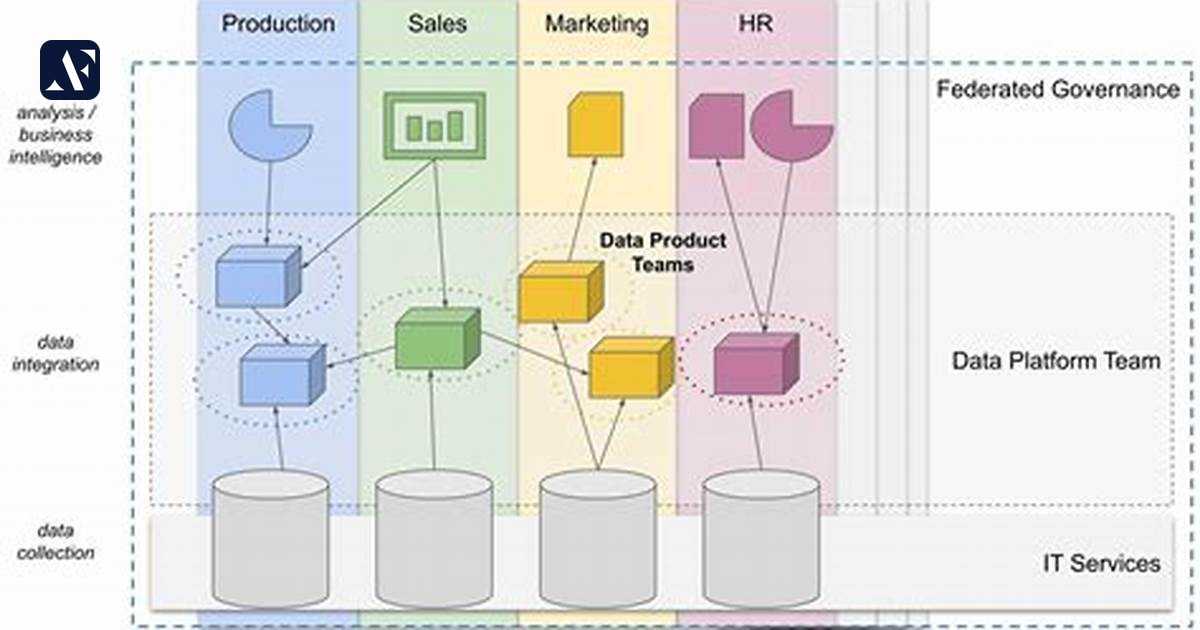
Data Mesh is a decentralized, domain-oriented data architecture paradigm that moves away from the traditional centralized data lake or data warehouse model. It’s built on four core principles:
- Domain-Oriented Decentralized Data Ownership: Instead of a central team managing all data, ownership is distributed to domain-specific teams (e.g., Trading, Risk, Marketing, Compliance). Each domain is responsible for its data, treating it as a product.
- Data as a Product: Data is designed, built, and served as a product with a clear lifecycle, quality standards, discoverability, addressability, trustworthiness, and security. It’s easily consumable by other domains.
- Self-Serve Data Infrastructure as a Platform: A foundational platform is provided to enable domain teams to easily create, publish, and consume data products without heavy reliance on a central IT team.
- Federated Computational Governance: Global rules and standards (e.g., security, privacy, data quality) are collaboratively defined and automated across all domains, ensuring consistency while maintaining domain autonomy.
Why Data Mesh is Critical for Forex Brokerages
The complexities of Forex operations, coupled with stringent regulatory demands, make Data Mesh particularly well-suited for brokerages:
Enhanced Operational Agility and Real-time Insights
- Unified Client View: Consolidate data from CRM, trading history, marketing interactions, and support tickets to build a 360-degree view of each client, enabling hyper-personalized services and targeted retention strategies.
- Advanced Risk Management: Integrate real-time trading data with liquidity provider feeds, market sentiment, and historical volatility across domains to power more accurate VaR models, dynamic hedging strategies, and proactive fraud detection.
- Algorithmic Trading Optimization: Provide low-latency access to cleansed, high-quality data products for AI/ML models, optimizing execution strategies and market predictions.
Streamlined Compliance and Regulatory Reporting
- Automated AML/KYC: Create data products that streamline customer due diligence, transaction monitoring, and suspicious activity reporting by integrating diverse data sources from client onboarding to trade execution.
- Auditability and Traceability: The 'data as a product' principle ensures clear lineage, metadata, and quality metrics for all data assets, significantly simplifying audits and demonstrating regulatory adherence.
- Global Regulatory Harmonization: For multi-jurisdictional brokers, Data Mesh enables easier adaptation to varying data privacy and reporting standards by localizing data product ownership and governance where needed, yet still providing a global oversight.
Scalability, Innovation, and Cost Efficiency
- Scalability: As brokerages expand into new markets or introduce new asset classes, domain teams can independently develop and integrate new data products without bottlenecking a central data team.
- Faster Innovation: Developers and data scientists gain self-serve access to trusted data, accelerating the development of new trading tools, analytics dashboards, and client-facing features.
- Reduced Technical Debt: By decentralizing data responsibility, legacy data silos can be gradually dismantled and modernized by the domain experts who understand them best, leading to a more robust and sustainable architecture.
Implementing Data Mesh: A Strategic Roadmap
Transitioning to a Data Mesh architecture is a significant undertaking that requires careful planning and a phased approach:
- Identify Data Domains: Begin by mapping your brokerage's core business domains (e.g., Trading, Client Onboarding, Risk & Compliance, Marketing, Payments).
- Establish a Core Data Platform Team: This team builds and maintains the foundational self-serve infrastructure and tooling that other domains will leverage.
- Define Federated Governance: Collaboratively establish global standards for data quality, security, privacy (e.g., GDPR, CCPA), and interoperability.
- Pilot Domain-Specific Data Products: Start with a critical domain to develop the first few data products, learn from the experience, and demonstrate value.
- Iterate and Expand: Gradually roll out Data Mesh principles and data product development across other domains, fostering a culture of data ownership and sharing.
- Cultural Shift and Training: Invest in training for domain teams to empower them to manage their data as products and adopt new tools and processes.
Challenges and Mitigation Strategies
While the benefits are substantial, implementing Data Mesh comes with its own set of challenges:
- Initial Complexity and Investment: The upfront cost and effort in establishing the foundational platform and shifting mindsets can be significant. Mitigation: Start small, demonstrate ROI, and iterate.
- Data Standardization and Interoperability: Ensuring consistency across domain-owned data products can be tricky. Mitigation: Implement strong API contracts, schema registries, and a robust federated governance model.
- Security and Access Control: Managing access across decentralized data products requires a sophisticated approach. Mitigation: Leverage centralized identity and access management (IAM) tools integrated with the data platform and fine-grained access policies at the data product level.
Conclusion: The Future of Data-Driven Brokerage
For founders and operators of Forex brokerages, Data Mesh architecture is more than just a technological upgrade; it's a strategic shift towards a truly data-driven organization. By breaking down traditional silos and empowering domain teams to own and serve their data as products, brokerages can unlock unprecedented levels of operational efficiency, gain deeper insights into market dynamics and client behavior, and navigate the complex regulatory landscape with greater agility. Embracing Data Mesh today is investing in a future-proof infrastructure that drives sustainable growth, innovation, and competitive advantage in a rapidly evolving financial ecosystem.
Operator Note:
Decisions in this article should be adapted to capital capacity, risk model, and target market; there is no one-size-fits-all setup.